

Vnish firmware for the Antminer L11 is already in the final stage of development
We are preparing support for the new generation of Scrypt ASICs, the Bitmain Antminer L11.
Vnish firmware for the L11 is in the final stage of development,
and we want to let everyone who is truly waiting to be among the first to test it know as soon as the release is ready.
Subscribe to our official channel, follow the news, and be the first to know when the firmware becomes available:
Contents
- What is the Bitmain Antminer L11
- What Antminer L11 models are available
- Antminer L11 20G: what does 20,000 MH mean
- Antminer L11 Pro — how it differs
- Antminer L11 Hyd 6U 33 GH and L11 HU2
- Antminer L11: profitability and electricity cost
- How much electricity the L11 consumes
- Why the Antminer L11 needs Vnish firmware
- What’s next: Vnish for the L11
- FAQ about the Antminer L11
- All Vnish firmwares
What is the Bitmain Antminer L11?
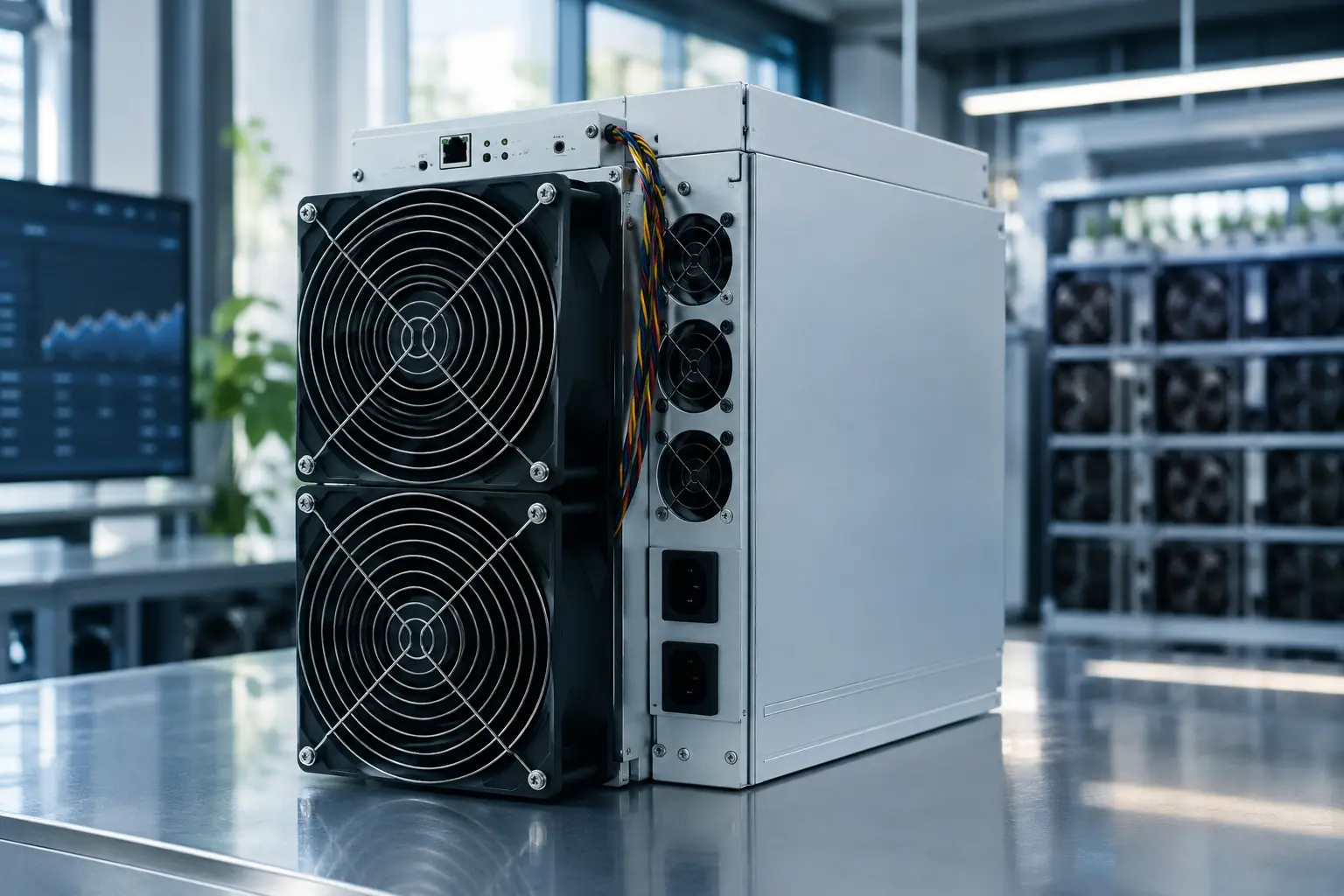
The Bitmain Antminer L11 is a new generation of ASIC miners for the
Scrypt algorithm. Unlike the popular Bitcoin miners from the S series, L11 devices are aimed
primarily at mining Litecoin and Dogecoin. In addition, thanks to the features of Scrypt, combined
mining of LTC and DOGE is possible, so profitability shouldn’t be evaluated based on a single coin alone.
At the same time, the L11 series is interesting not only for its increased hashrate. Bitmain is simultaneously developing
several versions of the device: from the air-cooled Antminer L11 at 20 GH/s to significantly more
powerful hydro-cooled models. In other words, the name “L11” actually covers an entire lineup
of ASICs with different power, cooling, and hosting requirements.
and when choosing a specific model it’s important to consider not only GH/s, but also power draw, efficiency, cooling,
and infrastructure cost.
What Antminer L11 models are available?
Right now several name variants of the L11 come up most often. Because of this, search queries often include
Antminer L11 20, L11 20G, L11 Pro,
L11 HU2, or L11 Hyd 6U. However, it’s important to understand: these are not the same device.
Comparing Antminer L11 models by hashrate and power draw
The figures shown are typical specifications for each model. Actual hashrate and power draw
depend on the specific unit and operating conditions.
Antminer L11 20G: what does 20,000 MH mean?
One of the most common queries is Antminer L11 20G, L11 20,000 MH
or simply L11 20. These all refer to the same base model with a hashrate of around
20 GH/s.
It’s easy to get confused by the units here. 1 GH/s = 1000 MH/s, so
20 GH/s = 20,000 MH/s. If you see the labels L11 20G, L11 20 GH/s, or L11 20,000 MH/s
in a store or calculator, these are usually just different ways of writing the same
performance class.
Antminer L11 Pro — a small name change, a noticeable difference
The Antminer L11 Pro outwardly belongs to the same air-cooled lineup, but its specifications
differ from the base L11. Hashrate is around 21 GH/s, and rated power draw is
around 3612 W.
At first glance, the difference between 20 and 21 GH/s looks small. But with round-the-clock ASIC operation,
raw speed isn’t the only thing that matters. Lower power consumption combined with a slightly higher hashrate means
better energy efficiency: roughly 172 J/GH versus 184 J/GH for the base L11.
Consequently, when buying it makes sense to compare not just the price of the device itself, but also the cost
per GH/s, power draw, and electricity rate. Sometimes a more expensive model turns out to be more attractive
precisely because of the electricity costs over its entire operating life.
Antminer L11 Hyd 6U 33 GH: where serious power begins
The Antminer L11 Hyd 6U is already an entirely different class of hardware. This version uses
hydro cooling and delivers around 33 GH/s at a power draw of about 5676 W.
Efficiency is around 172 J/GH.
The main advantage of Hydro isn’t just hashrate. Liquid cooling dissipates heat more effectively
and noticeably reduces noise levels compared to powerful air-cooled ASICs. For a mining
farm, that can matter far more than a few extra percentage points of performance.
But there’s a downside too: the L11 Hyd 6U requires appropriate infrastructure.
This kind of ASIC is intended primarily for professional hosting, where power, cooling,
racks, and maintenance are already planned for.
And what is the Antminer L11 HU2?
The Antminer L11 HU2 is an even more powerful hydro-cooled version with a hashrate of around
35 GH/s. At a power draw of around 5775 W, its efficiency is
approximately 165 J/GH, meaning it’s more efficient than both the base L11 and the L11 Hyd 6U in terms
of hashrate relative to power consumed.
That’s exactly why, when choosing between the L11, L11 Pro, L11 Hyd 6U, and L11 HU2, you can’t go
by the GH/s figure alone. The more powerful the ASIC, the more the electricity cost and the cost of the whole
infrastructure matter.
Antminer L11: profitability — how much can it actually earn?
One of the most popular queries is Antminer L11 profitability. It’s important to
keep in mind here: an ASIC doesn’t have a fixed “daily income” figure. Profitability changes along with LTC and DOGE
prices, network difficulty, total network hashrate, pool fees, and electricity cost.
Accordingly, the number a calculator shows today may look completely
different a week from now. This is especially noticeable with Scrypt miners, since changes in the price of Dogecoin or Litecoin
directly affect mining economics.
What the final profit depends on
L11 profitability isn’t calculated from hashrate alone
The simplified logic looks like this:
Profit = mining revenue − electricity − fees − additional expenses
So an ASIC with a higher GH/s figure isn’t necessarily the better buy if it requires significantly
more electricity or costs much more.
For Scrypt mining, combined mining is also worth taking into account. With the right pool
setup, the same computing resource can be used to earn rewards tied
to both Litecoin and Dogecoin. That’s why a profitability calculator is best thought of as a tool
for comparing scenarios rather than a promise of fixed earnings.
How much electricity does the Antminer L11 consume?
Electricity is one of the most important factors when choosing an L11. Even a difference of a few hundred watts
adds up to a noticeable amount over a year if the ASIC runs 24 hours a day.
| Model | Power | Approx. kWh per day* | Approx. kWh over 30 days* |
|---|---|---|---|
| L11 20G | 3680 W | 88.32 | 2649.6 |
| L11 Pro | 3612 W | 86.69 | 2600.64 |
| L11 Hyd 6U | 5676 W | 136.22 | 4086.72 |
| L11 HU2 | 5775 W | 138.60 | 4158.00 |
*Calculated for continuous 24/7 operation at rated power consumption. Actual values
may vary.
For example, the base L11 at 3680 W consumes about 88.3 kWh per day.
Over 30 days that’s roughly 2650 kWh. Accordingly, if electricity costs
$0.10 per kWh, energy alone would cost around $265 per month, and at a rate of $0.05, about $132.5.
That’s exactly why the question “how much does the Antminer L11 earn?” without specifying the electricity cost is practically
meaningless. The same ASIC can be attractive for industrial-scale mining with cheap
electricity and completely unappealing at an expensive residential rate.
Why does the Antminer L11 need Vnish firmware?
A modern ASIC is no longer just a set of chips. Software control of the device plays an important role:
temperature, frequencies, voltage, fans, stability, and hashrate control.
This is exactly where interest in Vnish for the Antminer L11 comes in. For an ASIC owner, firmware
isn’t just a way to change one number in the interface. Good firmware should make it possible
to manage hardware more effectively and choose an operating mode suited to specific farm conditions.
For one miner, the priority might be maximum hashrate, while for another minimum
power consumption matters more. A third might aim for a balance between temperature, stability, and efficiency.
This becomes especially noticeable on large farms, where even a small change in parameters across hundreds
of devices translates into a significant difference in electricity consumption.
Vnish for the L11: development is already close to release
Support for the Antminer L11 is currently in the final stage of development.
This matters especially to owners of the new L11, who want more
control options for their hardware instead of relying only on the manufacturer’s stock software.
We recommend following the official Vnish news so you don’t miss the moment support becomes available.
What will be especially interesting for L11 owners?
The arrival of Vnish for this new generation of ASICs is especially interesting because the L11 series differs noticeably
from previous generations of Scrypt hardware. There are both air-cooled models and powerful hydro-cooled
ones, which means device management requirements matter even more.
At the same time, what matters to a miner isn’t a record figure held for a few minutes, but a mode in which the hardware
can run stably for months. After all, temperatures, power draw, hashrate stability, and ASIC behavior
under sustained load directly affect the farm’s economics.
That’s exactly why the development of alternative firmware for the Bitmain Antminer L11 is an important
event for owners of this generation of devices. The more control tools an operator gets,
the easier it is to tune the mode to a specific electricity cost and the mining site’s goals.
FAQ: frequently asked questions about the Antminer L11
What is the Antminer L11?
The Antminer L11 is a series of Bitmain ASIC miners for the Scrypt algorithm, aimed primarily
at mining Litecoin and Dogecoin.
How many GH/s does the Antminer L11 have?
The base Antminer L11 has a hashrate of about 20 GH/s. There are also the L11 Pro at 21 GH/s,
the L11 Hyd 6U at 33 GH/s, and the L11 HU2 at 35 GH/s.
Are the Antminer L11 20G and L11 20,000 MH the same thing?
Yes. 20 GH/s equals 20,000 MH/s. These are just different ways of writing the same hashrate level.
Which is better: the Antminer L11 or the L11 Pro?
The L11 Pro offers a slightly higher hashrate and better rated energy efficiency.
But the final choice depends on the device price, electricity cost, and operating conditions.
What is the Antminer L11 Hyd 6U?
This is the hydro-cooled version of the L11 with a hashrate of about 33 GH/s and power draw of about 5676 W.
It’s designed primarily for professional ASIC hosting.
What is the Antminer L11 HU2?
The L11 HU2 is a hydro-cooled model at roughly 35 GH/s with a power draw of about 5775 W.
It’s one of the highest-performing versions in the L11 series.
What is the profitability of the Antminer L11?
There’s no fixed profitability figure. It depends on the LTC and DOGE exchange rates, network difficulty,
overall network hashrate, pool fees, and electricity cost. So actual profit needs to be calculated
from current data right before purchase or before changing the operating mode.